
Proving Treatment in St. Petersburg & Clearwater
In this video Dr. Kass discusses his approach on treating Acne Scars. This multi-modality approach involves multiple treatments such as subcisions, fillers and deep facial resurfacing
Ready to treat acne scars in St. Petersburg & Clearwater? Our cosmetic professionals can help reduce the appearance of acne scars at our plastic surgery clinic. Read more to learn about your treatment options and how we achieve results.
Acne Overview
Acne is a skin condition which occurs when oil secretions and dead cells block the skin’s pores. In severe cases, hundreds of pimples or larger, painful, red lumps may cover the face, neck, chest, and back.
Acne is most common in the young, and it is said that this disease afflicts 80% of all teenagers. Unfortunately, even as hormone levels stabilize and patients pass into their 20’s, 30’s and beyond, acne breakouts still occur. This happens more often in women, usually just before menstruation. The treatments for adult patients experiencing active acne breakouts are diverse; but it is crucially important to try to prevent the breakouts in order to reduce the chances for developing acne scars, the dreaded complication of this disease.
About Acne Scars
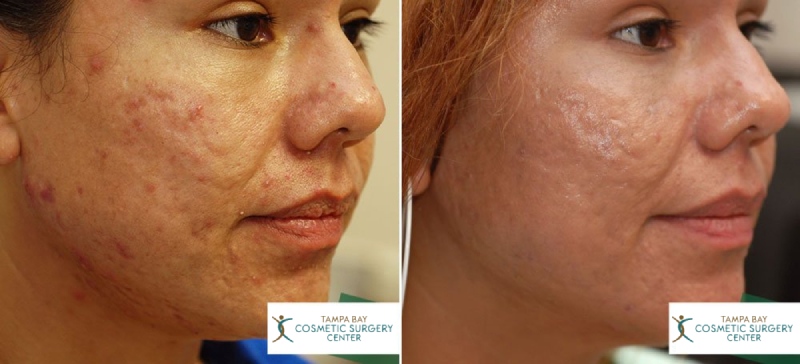
 Acne scars may be described as ice pick, boxcar (larger but shallower) and rolling. Many patients with acne have a combination of all three. No matter which type is present, the scars are often deep, and may be a cause of great embarrassment and even depression for those who have it.
The good news is that there are now great acne treatments in St. Petersburg & Clearwater for this problem. Unlike what you may read elsewhere, there is no magic cure. The optimal treatment of acne scars requires selecting a physician who is willing to apply a multi-modality approach specifically designed to address your individual needs. The treatment of acne scars is never as easy as made out to be by some laser companies and some less than scrupulous practitioners. Specifically, we at the Tampa Bay Cosmetic Surgery Center emphasize that there is no simple “cookie-cutter” approach and the right treatment is the treatment specifically designed for you. Dr. Kass believes that the question is not which laser should be used, but instead what combination of different treatments is best for you.
If you are a St. Petersburg & Clearwater patient that is suffering from acne scars, why wait any longer to seek treatment? Why be embarrassed or depressed by a condition which is no fault of your own and for which there are such excellent treatments available today? Please call us today to see what we can do to help you. We know you will be glad that you did!

Still unsure? See what one of our many happy patients recently wrote:
“It has been 1 year and six months since I got the Hetter Peel administered by Dr. Kass. He told me during the process that I would look better in a year then I did after the healing process. He was absolutely right!! My skin is amazing, I had deep lip lines, my under eyes were lined and other areas of my face. My lip lines and other lines are gone. My skin is in the best shape of my entire life. Smooth, pores are much smaller (although he said it wouldn’t improve pores) and I barely need to wear any coverage make up, only a tint.
If you have those nasty lip lines, other signs of aging, seek counsel and treatment with Dr. Kass. Don’t hesitate, I wasted quite a bit of money on other treatments that didn’t provide any long term correction
The Hetter Peel is the best treatment by far for resurfacing your skin. Once done, your skin will continue to get better and better.
I continue to use Dr. Kass products, which also has maintained and continued my unbelievable results.
Thank you Dr. Kass and his great team for giving me this gift!”
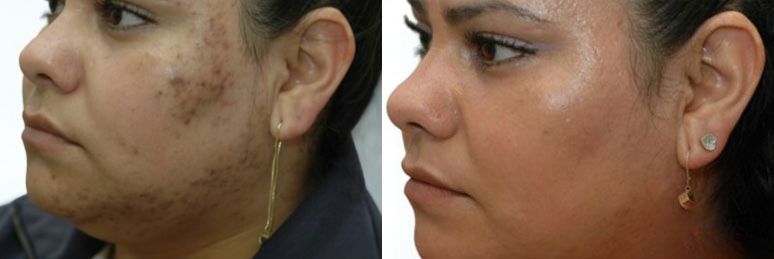
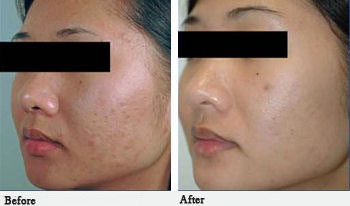
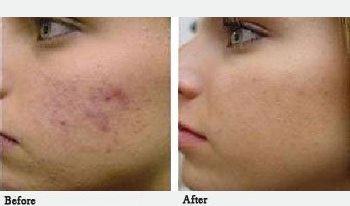
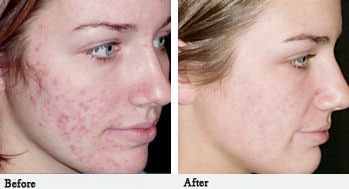
Before & After
Sign up for our email newsletter and get a $50 coupon!
Please contact The Tampa Bay Cosmetic Surgery Center or call (727) 522-3223 for more information and a personal consultation.
What to Expect with Acne Scar Treatment at Tampa Bay Cosmetic Surgery Center
Many patients tell us that considering acne scar treatment can feel both exciting and reassuring once they learn about the personalized, multi-step approach we take at Tampa Bay Cosmetic Surgery Center in . You might notice that treatments often combine several methods such as subcision, microneedling, chemical peels, and fillers to achieve natural-looking improvements.
Dr. Kass and our caring, board-certified team will guide you through every step—from your initial consultation to post-treatment care. While results vary depending on the type and severity of scars, most patients begin to see noticeable improvements within weeks, with continued skin rejuvenation over several months.
We encourage you to ask questions and share your concerns during your visit. Remember, the journey to smoother, healthier skin is a partnership between you and your trusted provider at Tampa Bay Cosmetic Surgery Center.
FAQs
Q: What types of acne scars can be treated at Tampa Bay Cosmetic Surgery Center?
A: We treat a variety of acne scars including ice pick, boxcar, and rolling scars. Many patients have a combination, and our personalized multi-modality approach addresses each scar type effectively.
Q: How many treatment sessions will I need for optimal results?
A: The number of sessions varies based on your scar severity and skin type. Typically, patients undergo multiple treatments spaced weeks apart to gradually improve skin texture and appearance.
Q: Are the acne scar treatments painful or require downtime?
A: Some treatments may cause mild discomfort and temporary redness or swelling. Downtime depends on the procedure, but Dr. Kass provides detailed post-care instructions to ensure your comfort and optimal healing.
Q: Can acne scars be completely removed?
A: While no treatment can guarantee complete removal, our multi-modality approach aims to significantly reduce scar visibility and improve skin texture, leading to a more youthful and even complexion.
Q: How do I schedule a consultation for acne scar treatment at Tampa Bay Cosmetic Surgery Center?
A: You can call us at (727) 522-3223 - St. Petersburg Office or (727) 522-3223 - Clearwater Office or use the to request a personal consultation with Dr. Kass and his team. They will assess your needs and craft a customized treatment plan.